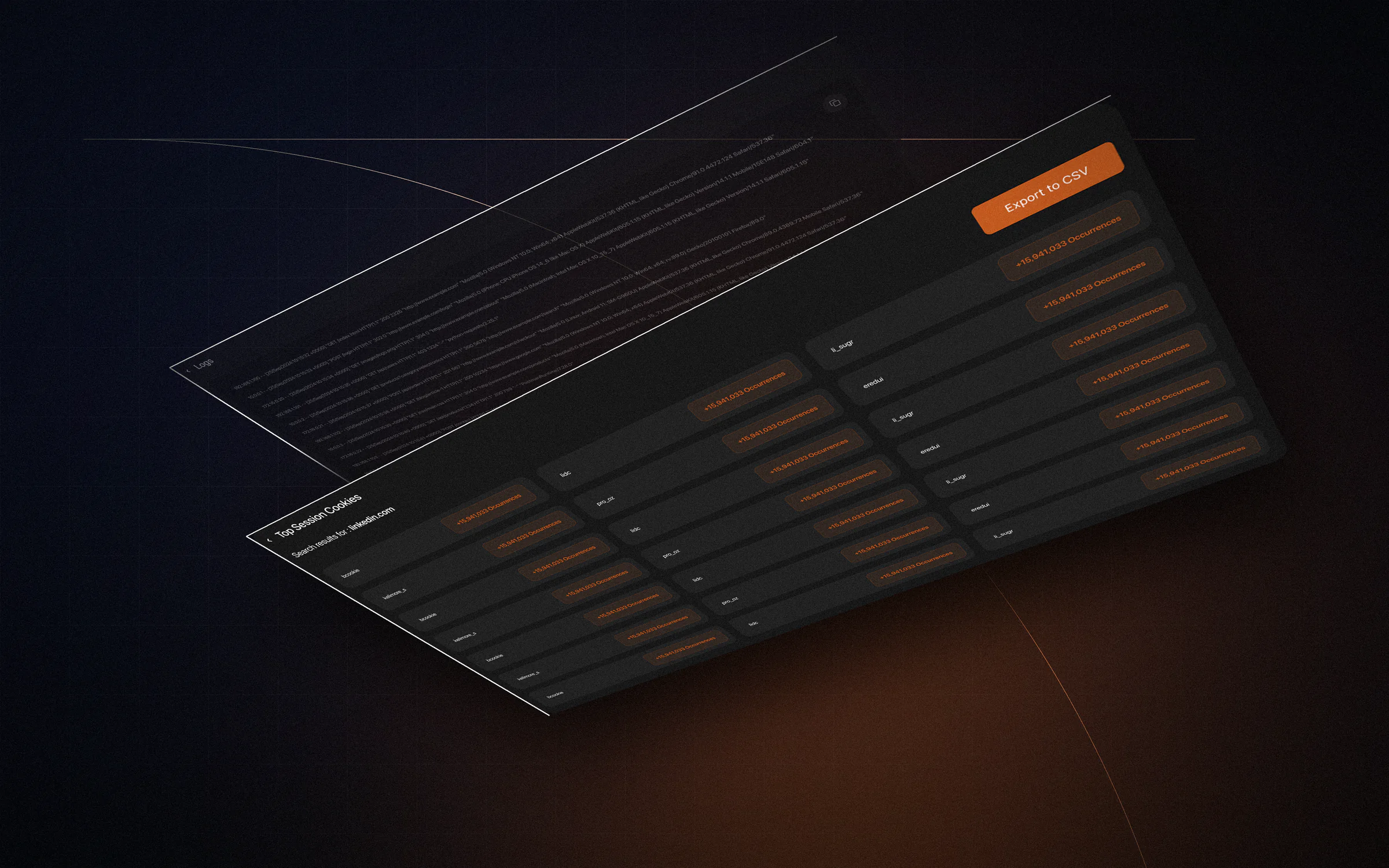
Session security
A session is already signed in
After a successful sign-in, a service commonly gives the browser a session cookie: a token used to recognise an authenticated session. Infostealers can copy those cookies alongside saved passwords. If a service accepts a stolen token without additional checks, an attacker may reuse the session without repeating the password or second-factor step. Expiry, server-side revocation, device binding and risk checks can constrain that reuse. This is why Breachify’s design treats cookies as evidence in their own right, with a validity date and a path back to the affected device.
This live demo needs JavaScript.
The timeline separates two mechanisms that are easy to confuse. Expiry is a lifetime set by the service; revocation is a server-side decision to stop accepting a session. The demo models those mechanisms with fictional tokens and an intentionally simplified acceptance rule. A displayed future expiry cannot establish that a stolen cookie still works: the service may already have revoked or constrained it. The interface should therefore communicate the recorded lifetime without implying that the platform has tested access to the account.
A password describes a credential. A session token can carry an authentication decision that has already happened.
Sensitive applications
Sensitive Applications begins with an explicit before-search state: “Search results will appear here”. The screen reuses the cookie totals, which do not yet explain the application dataset itself. The next frame moves to URL details, presenting long resource addresses as a card grid with an export. Truncation protects the layout but must not be the only way a reader can access a full address. The proposed CSV path matters here: an application-level question eventually needs resource-level evidence that another person or tool can inspect without guessing the hidden part of a URL.
Android apps are assets too
A saved app login need not have an ordinary website URL. Android credentials can use an android:// origin containing a signing-certificate fingerprint and the app’s package name. Together these identify an application more precisely than its display name alone. In the APK views, Breachify treats that identifier as an organisational asset: one view shows compromised app users, another lists discovered resources. Weak badges return from the domain tables, as do the two dates that distinguish compromise from ingestion. The shared structure lets the evidence change without making the reader learn a new investigation model.
This live demo needs JavaScript.
The logs underneath
The Logs frame preserves line-oriented evidence instead of compressing it into a summary. Specifically, the visible material is an HTTP access log: requests, response status codes, timestamps and user agents. It should not be mistaken for the full contents of an infostealer bundle. A redirect after a login request, a denied request or a missing path can be a useful lead, but no one line proves why the event happened. Keeping the original structure gives a reviewer a route back from a visual interpretation to the fields that support it.
This live demo needs JavaScript.
The interactive viewer below uses documentation IP addresses and fictional services. Select a field to see what it records, then filter the response classes or search the source text. Filtering changes only what is visible, so “Copy visible” has a precise scope. This is a small interaction, but it captures an important design responsibility: a helpful layer over raw evidence must preserve the original record and make the limits of its interpretation clear.
Technical references: OWASP on session lifecycle and invalidation; Chromium’s Android credential identifier format.
The intelligence layer
How raw logs become a trustworthy dataset
A dashboard cannot be more reliable than the units it counts. In the proposed Breachify pipeline, an incoming row is an observation, an extracted credential or cookie is an artefact, a device is an entity, and an account is another entity. Those quantities are related, but they are not interchangeable. Two channels may contain copies of the same artefact, and one infected computer may expose many accounts. The data-science task begins by preserving those distinctions so a mirrored source cannot inflate a chart into a claim about additional victims.
Ingestion first retains the original material with source identifiers, collection time, integrity metadata and a parser version. Deterministic parsers extract known structures; schema validation marks malformed or missing fields instead of inventing replacements. Normalisation standardises timestamps, host identifiers and resource formats while preserving the original values for inspection. A semantic classifier could assist with unfamiliar application names or record categories, but its output should remain a labelled inference with its source text and a review path. A common event schema is the organising principle; OCSF is a relevant reference for mapping heterogeneous security data into a shared vocabulary, not a claim of an existing Breachify integration.
This live demo needs JavaScript.
Deduplication then works on a defined artefact identity rather than on a person’s name alone. Exact fingerprints can identify equivalent content while keeping each source sighting and arrival time. Entity resolution links devices, accounts, domains and applications with explicit relationship types. Ambiguous matches stay separate or become candidate links for review. A shared computer is not sufficient evidence that two accounts represent one person. These choices affect every downstream feature: repeat exposure, affected asset counts, first-seen time, evidence freshness and the breadth of access implied by a device record.
The intelligence layer
Every metric needs a denominator
A compromised-device timeline should count distinct device entities in a stated event-time bucket. An ingestion timeline should describe when evidence first entered the collection. The two clocks can be shown together, but their labels must not collapse into “activity”. Password-strength proportions need a defined eligible population, explicit handling of missing or unassessable passwords, and percentages computed over the same denominator. Occurrence counts describe repeated artefacts, not automatically distinct people. The miniature lets the reader change the time basis and duplicate policy to see why seemingly small processing choices change a chart.
Device count = distinct device identifiers in the selected population and event-time window. Ingestion lag = first recorded time − compromise time, only where both timestamps are known and coherent. Category share = eligible records in the category ÷ all eligible records in that population. Unknown timestamps remain an explicit category.
Features for risk assessment should be derived from those documented units. Useful candidates include credential exposure categories, account privilege, sensitive-application access, session metadata, independent source agreement and time since detection. A novelty model could compare an organisation’s current pattern with its own historical baseline, using robust deviations or an isolation-based detector. Baselines need a defined population and enough history; a new customer cannot be treated as if its normal behaviour were already known. Source coverage and collection changes also matter: a sudden rise in observations may reflect a new feed rather than a sudden rise in compromise.
The intelligence layer
What would make the model credible?
For supervised ranking, the target needs to be operational and measurable: for example, whether an analyst confirms actionable exposure within a defined review window. Training data must use only the evidence available at the time of each decision. Later remediation notes, future detections and duplicate copies of the same device cannot leak into the evaluation features. A time-based holdout tests future performance; grouping related devices or campaigns across splits reduces memorisation. Performance should also be examined by source, organisation size and evidence completeness, because a strong overall average can conceal a weak operating segment.
For a review queue, precision at the team’s daily review capacity and recall of confirmed high-impact cases are more informative than an isolated accuracy percentage. Probability calibration only becomes meaningful if the model predicts a defined outcome over a defined time window; calibration curves and a proper scoring rule can then test those predictions. The sandbox here is an interpretable priority rule, so it makes no probability claim. EPSS illustrates why targets matter: FIRST defines it around exploitation of published vulnerabilities within 30 days. It should not be relabelled as a probability that an exposed credential or session will be abused.
The generative layer needs a different evaluation set. Analysts should judge citation correctness, whether each factual claim is supported, whether uncertainty is preserved, and whether the proposed verification steps follow from the record. Tests should include missing timestamps, contradictory sources, revoked sessions, malicious instructions embedded in logs and cross-tenant retrieval attempts. Track failure categories, model and prompt versions, latency and cost alongside usefulness. NIST’s AI Risk Management Framework supplies a useful reference for repeatable measurement and documented limitations. No benchmark results are claimed here: this is the evaluation plan for the proposed system.
Three shapes of evidence
Credentials, session tokens and HTTP logs answer different questions. A credential identifies a login; a session token may represent an existing authenticated context; a request log records an observed exchange. Giving each its own view helps the reader avoid equating all exposure with a password reset. The connection between those views is still the investigation context: the organisation, resource or device being examined. The final chapter turns to the surrounding service: defining monitored assets, exporting large collections and controlling who can retrieve a file.